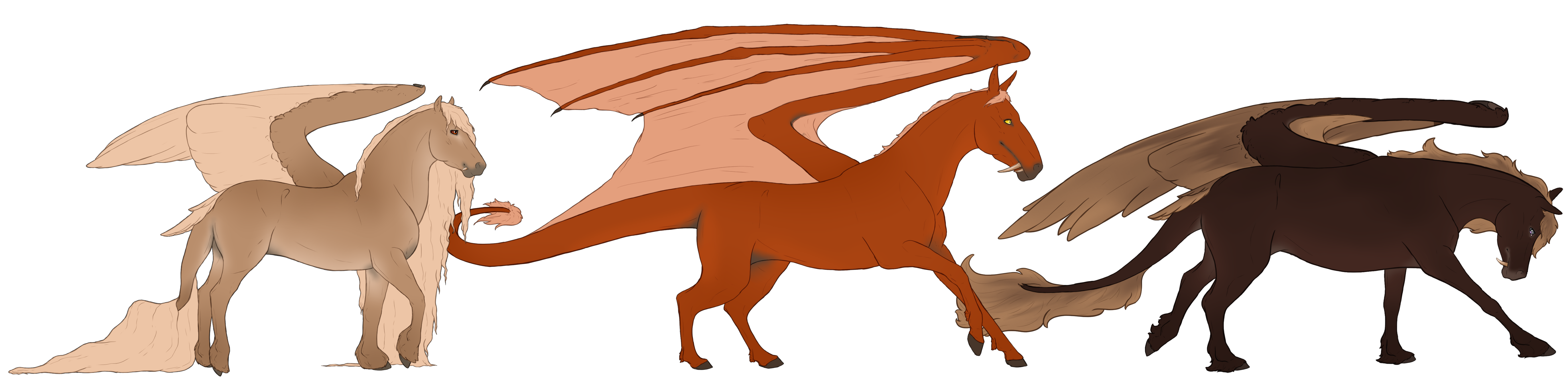
Traits
Grey[G] (Uncommon)
nG | GG
Trait Count - 3
Grey causes the horse to become white as they age. Compared to a normal horse, BAs grey significantly slower. Though, compared to the lifespan of a Beatus it makes sense.
- Skin and hooves are unaffected by grey.
- Flight feathers and webbing will match mane color.
- When present with white markings, grey must still be visible when next to any white.
- Dapples are almost always seen through the stages, and blood marks can start forming at any stage and become prominent towards a BAs final grey stages.
Our guide is influenced by this one over on dA.
When uploading and designing a grey, the later or earlier stage than their normal design is required. This can simply be done on an extra Miniside added to the import, either in the colum of extras or somewhere else not blocking the import.
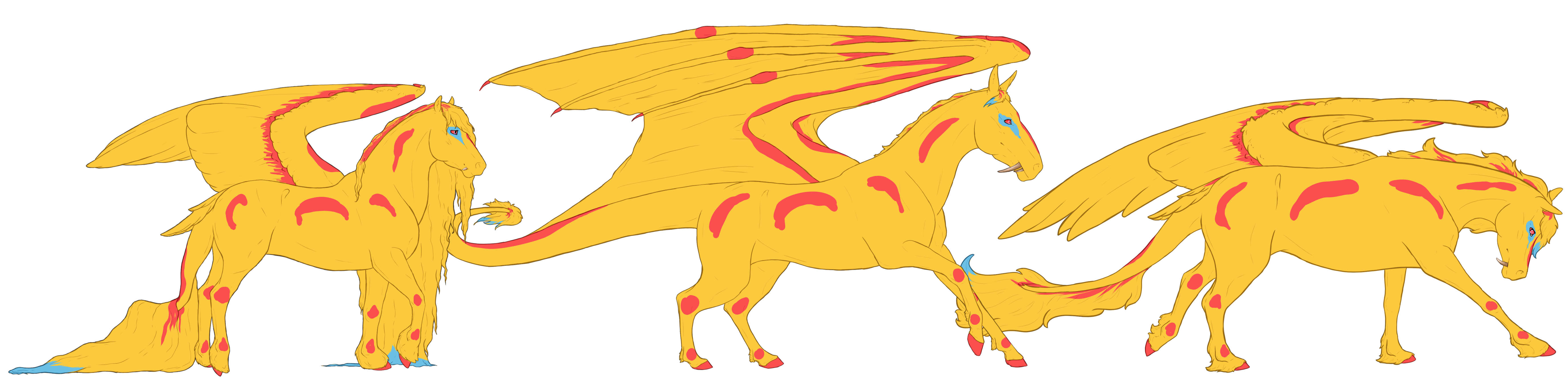
Grey Range and Expression
Blue is the area where grey starts. Goggles and the tail are required for the most minimal expression.
Yellow is where grey will express and spread somewhat evenly across the coat.
Red is where grey affects last.
Stage 1
Age Range
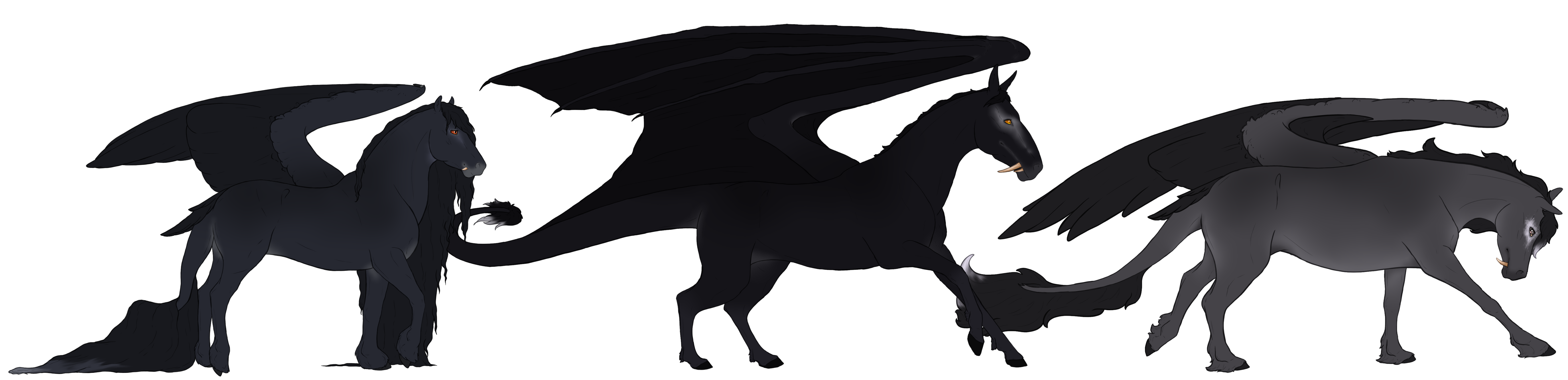
Grey will always start at the head. Foals will always have grey 'goggles', these can be pretty faint when they're young. The tip of the tail will also grey early on.
Stage 2
Age Range
Early - 5- 80 years
Average - 50 - 300 years
Late - 100 - 1,000 years
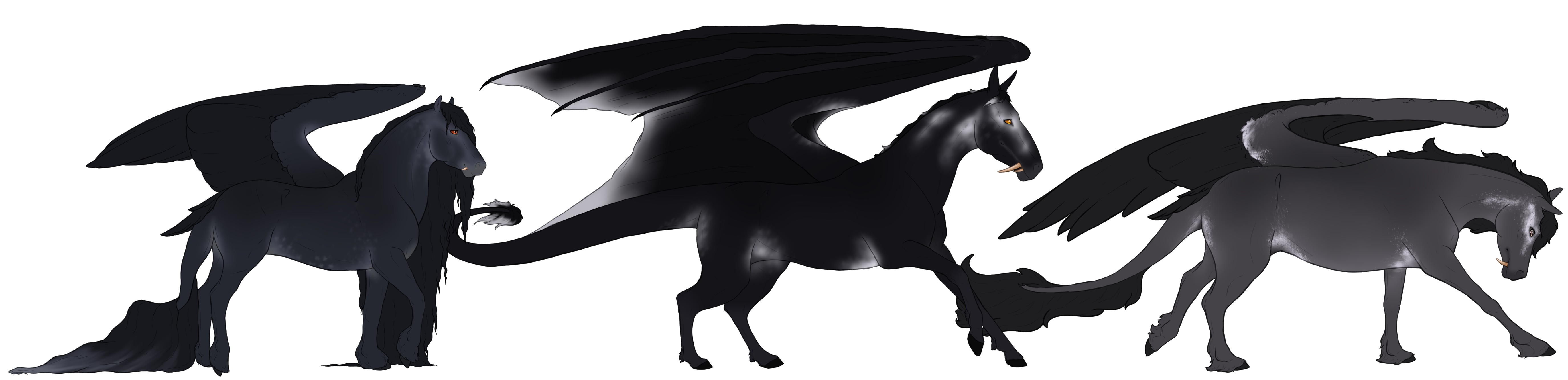
Grey will progress to the inner contours of the body(flank and elbow). You can also start to see dappling at this stage.
Stage 3
Age Range
Early - 80 - 200 years
Average - 300 - 800 years
Late - 1,000 - 5,000 years
Grey will begin to progress from previous points, and dappling will be more pronounced.
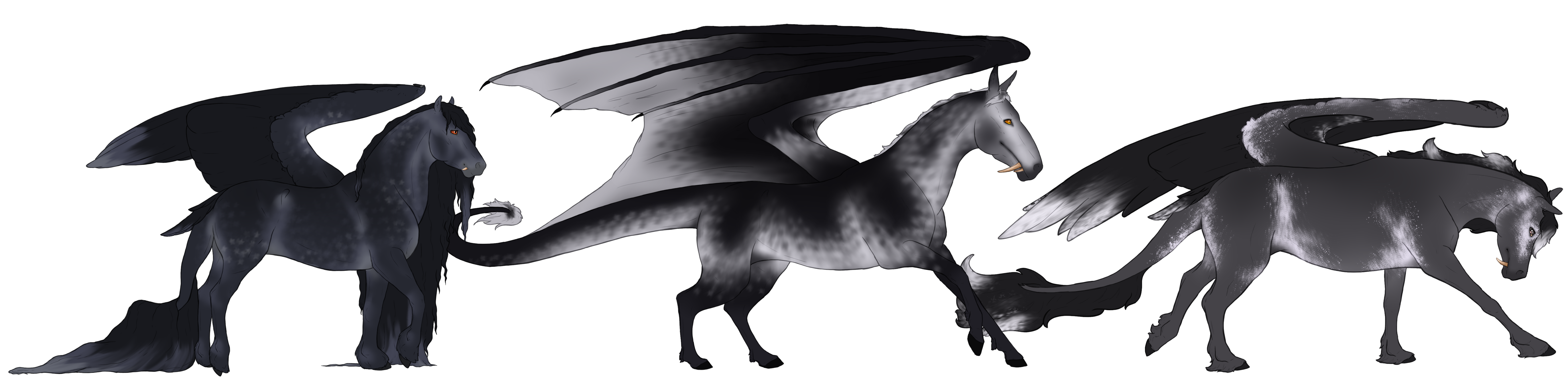
Stage 4
Age Range
Early - 200 - 900 years
Average - 800 - 5,000 years
Late - 5,000 - 10,000 years
Grey will to progress further, and dappling still pronounced and visible.
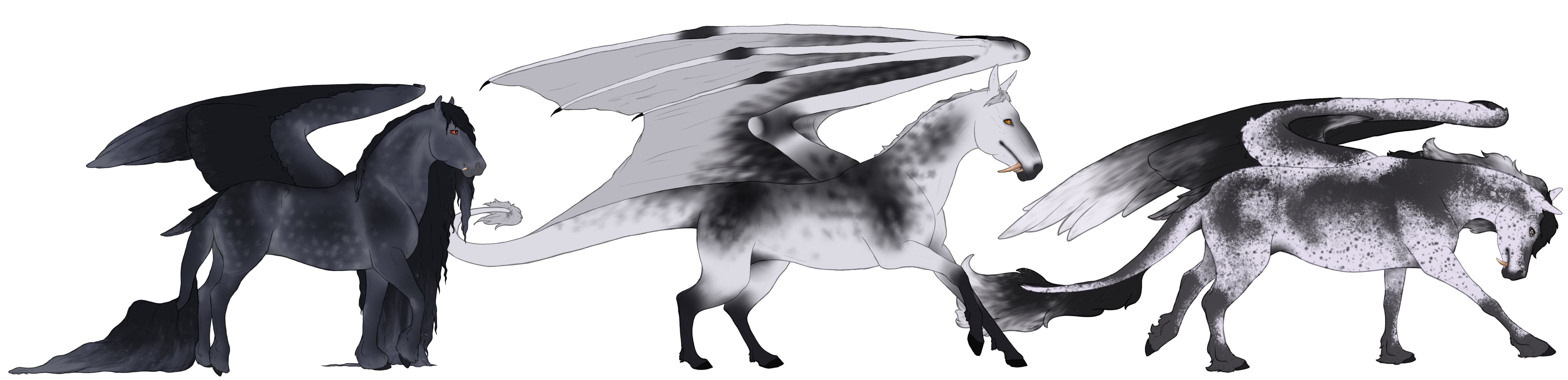
Stage 5
Age Range
Early - 900 - 1,500 years
Average - 3,000 - 10,000 years
Late - 10,000 - 15,000 years
Grey will to progress further, turning the horse nearly completely white. Dapples will begin to disappear, while mane and tail may whiten. Mane and tail can still be somewhat dark at this stage. Joints will be the last area to grey out.
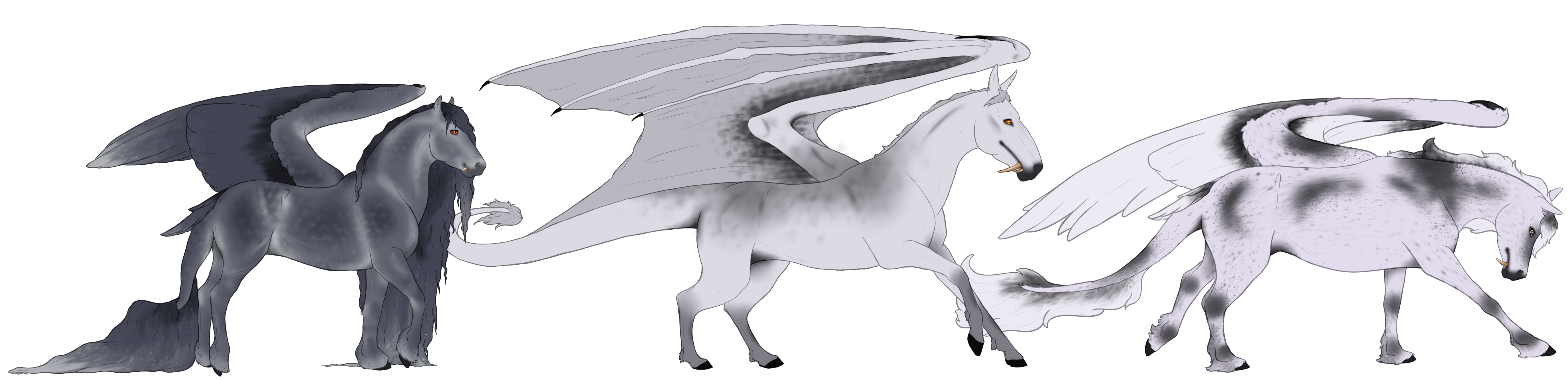
Stage 6
Age Range
Early - 1,500 - 3,000 years
Average - 10,000 - 15,000 years
Late - 15,000 - 20,000 years
Grey has whitened out the whole coat at this point. There may still be areas that are darker, especially around the joints.
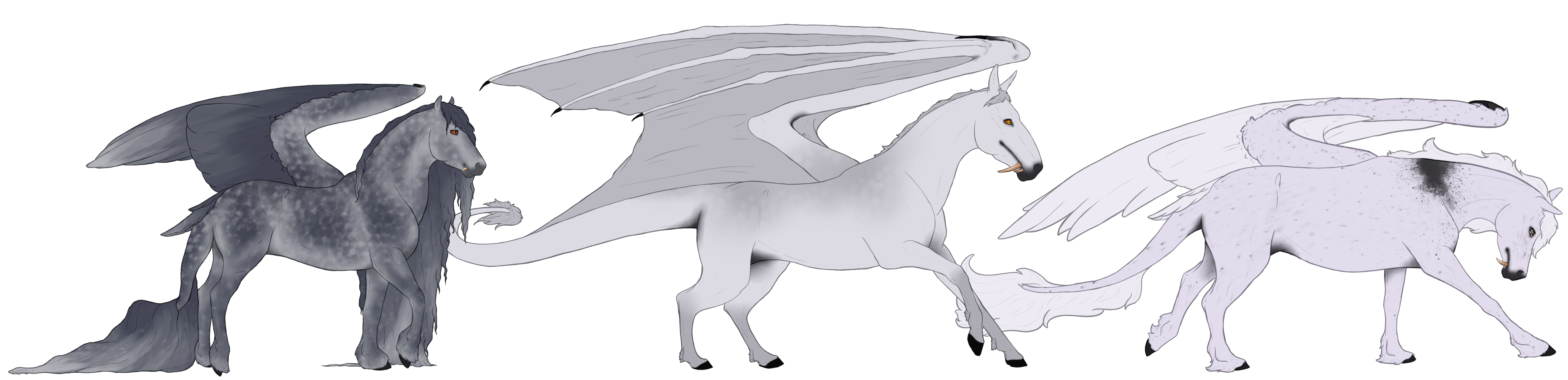
Pangare Fleck[Pan-f] (Uncommon)
Pangare Fleck || nPan-f | PanPan-f
Trait Count - 2
Pangare Fleck causes speckles and spots to stem from the different colors used in pangare.
Pan Range
Blue is the minimum required expression.
Yellow is the maximum optional expression.
Red is the area expression is not allowed.
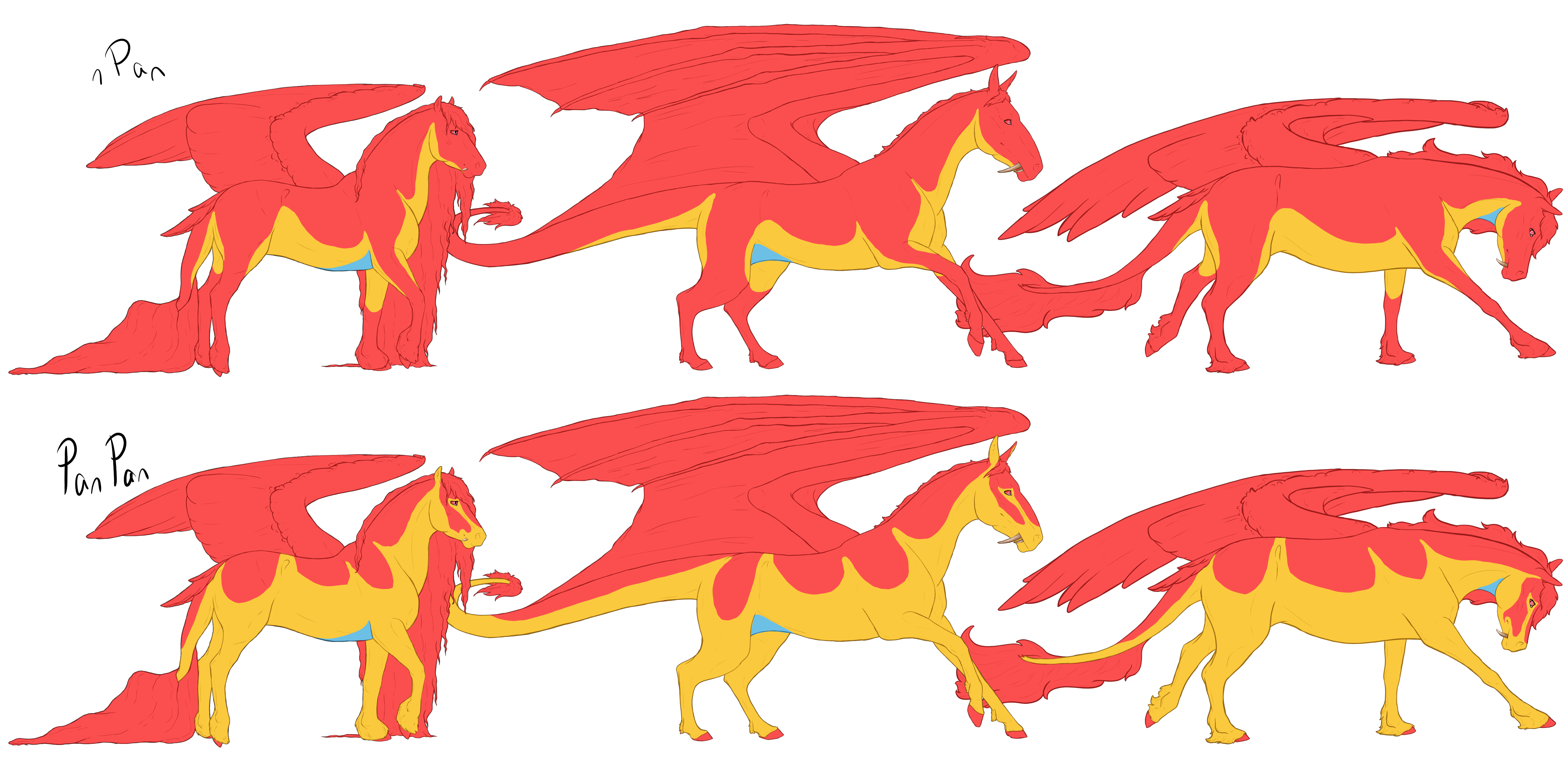
Pangare Fleck Examples
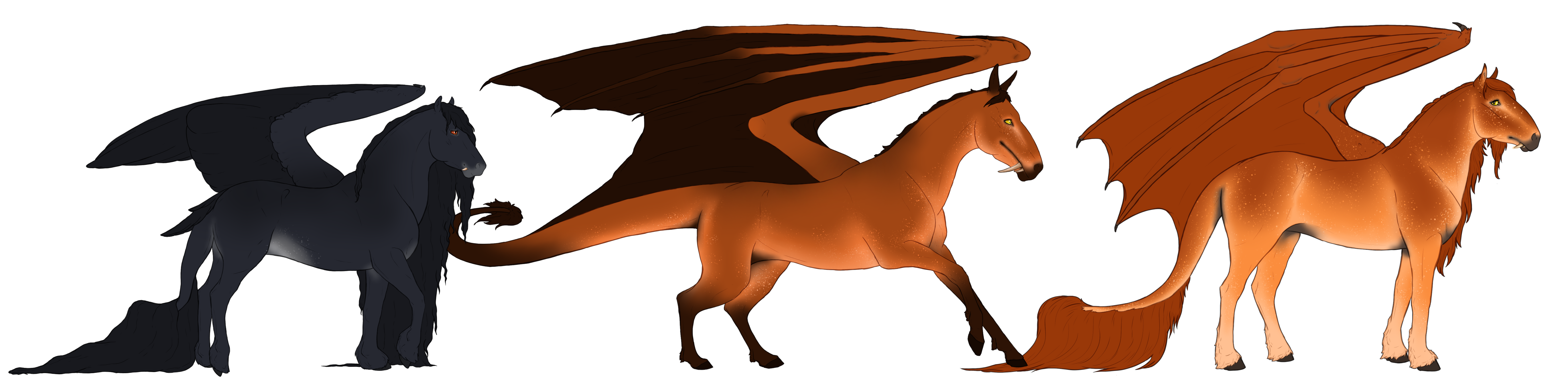
Sooty Dust[Sty-d] (Uncommon)
nSty-d | StySty-d
Trait Count - 2
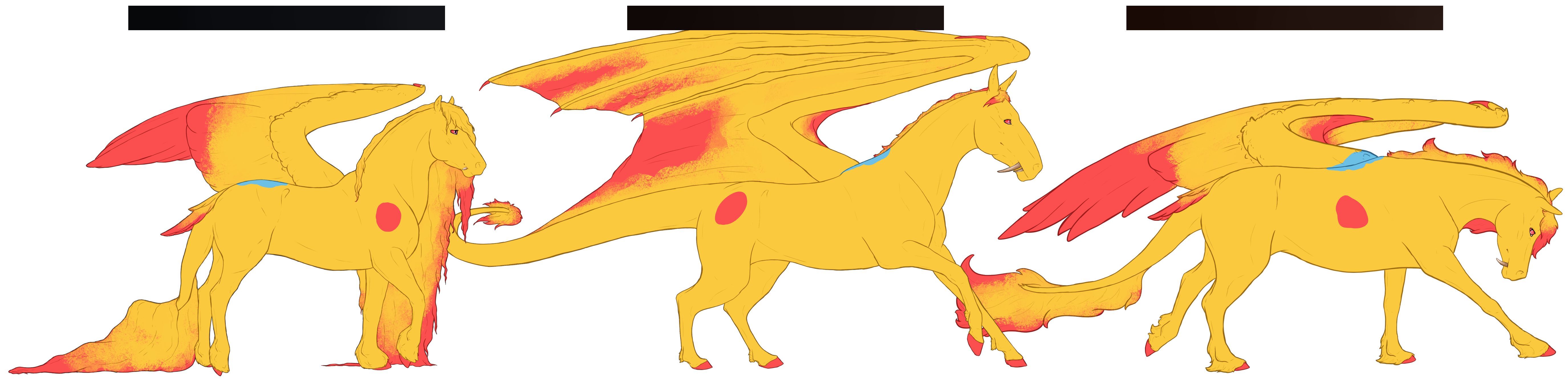
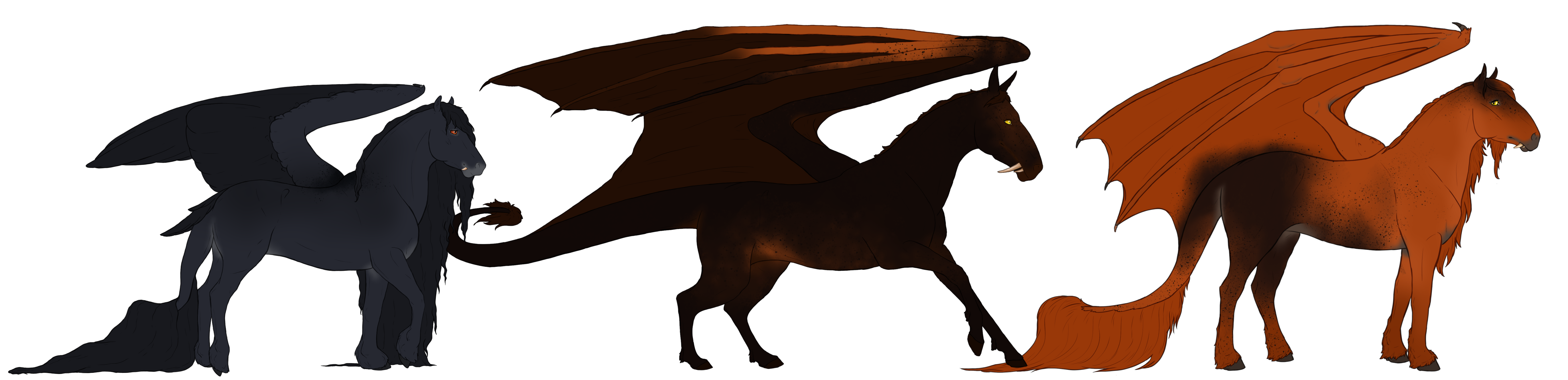
Sooty Dust smooths out the texturing in sooty and can also prevent dapples from appearing. It adds smaller flecks and spots that stem from the main part of sooty.
- Mane, flight feathers and webbing will be affected by sooty dust.
Sooty Range
Blue is the minimum required expression.
Yellow is the maximum optional expression.
Red is the area expression is not allowed. Sooty must show at least 10-15% of the base coat.
The black palettes provided are a simple guide, as different coats will likely have different tinted blacks. Though, these guides do set what the darkest possible natural black can be in terms of hex code. Anything that is darker than the palettes will be asked to be changed.
Sooty Dust Examples
Pangare[Pan] (Common)
Pangare || nPan | PanPan
Trait Count - 1
Pangare is a modifier that causes the underside, or belly, of a Beatus, to be lighter in color and even more saturated in color. Dominant pangare has a different expression than the non-dominant expression of pangare, this difference is most easily seen in the effect it has on Black-based BAs.
- Heavy pangare expressions need to have some kind of two-tone pangare present, this can be as simple as adding a lighter gradient by the hooves.
- Pangare will always be a soft gradient.
As stated above, pangare on black has a unique expression. In its non-dom form[nPan] will act relatively normal, lightening the undercoat. In its dominant form[PanPan], pangare will act as it does on bay and chestnut base BAs. This means PanPan on black will always be red hairs instead of lighter hairs like in nPan expressions.
Pan Range
Blue is the minimum required expression.
Yellow is the maximum optional expression.
Red is the area expression is not allowed.
Minimum Pangare Expression
The palettes provided are a simple guide, as different coats will likely have different variations. These guides do show an approximate as to how saturated pangare can be across different coat colors.
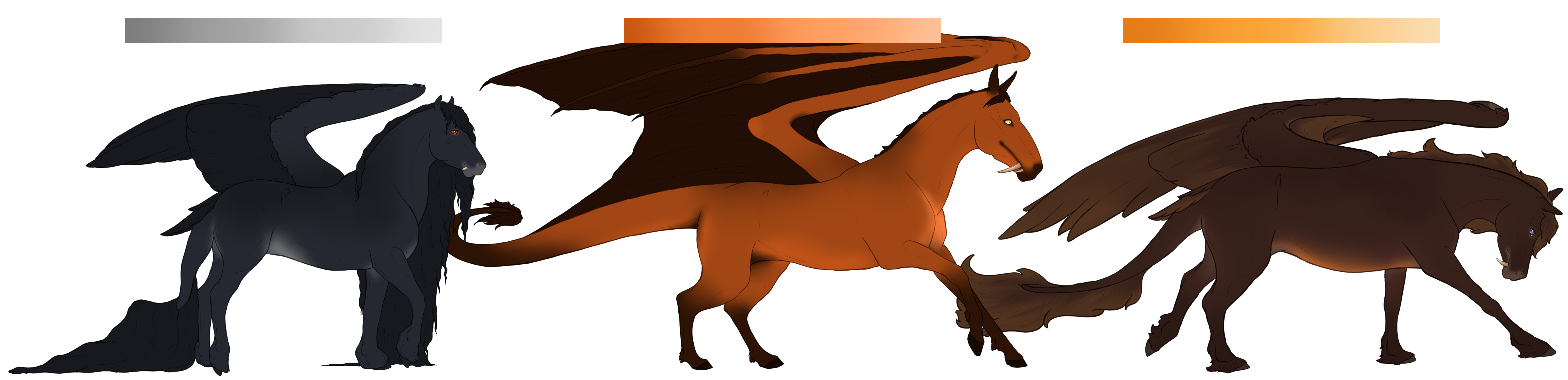
Medium PanPan and Maximum nPan Expression
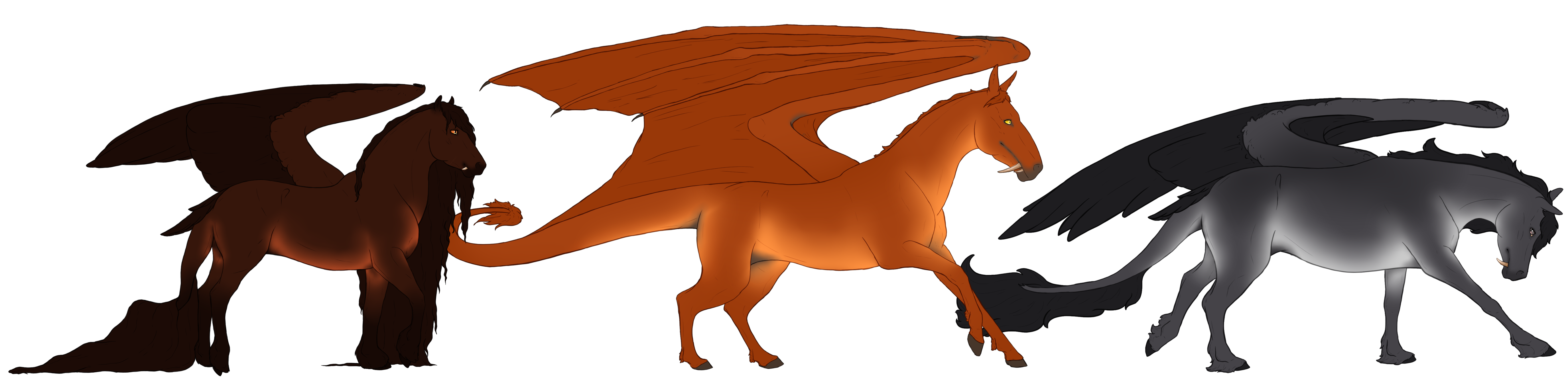
Maximum PanPan Expression
The Demon is displaying PanPan on Black, which is why it's now red in color. The palettes on the min example will come in handy if you're struggling to get a nice color.
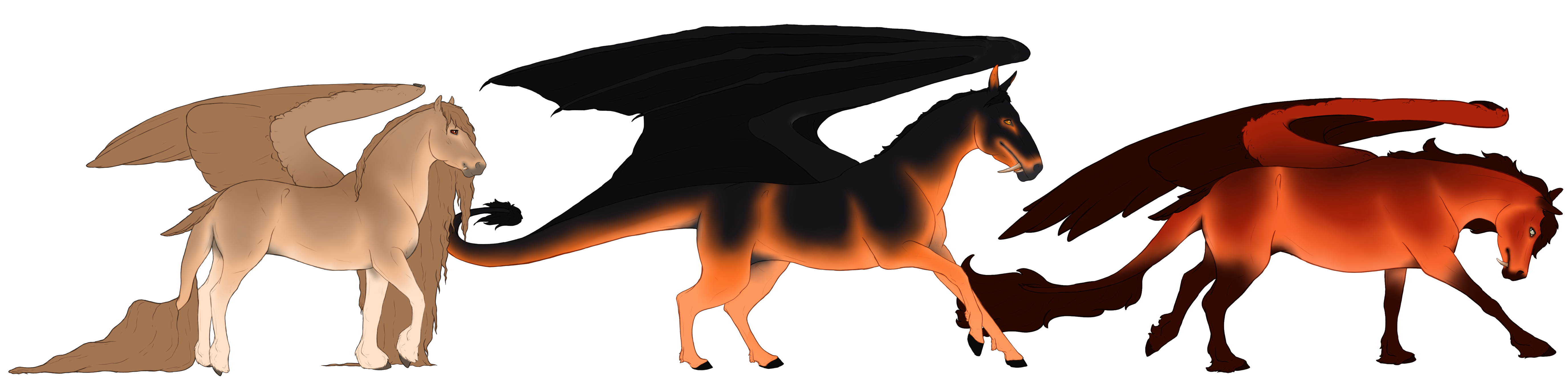
Sooty[Sty] (Common)
nSty | StySty
Trait Count - 1
Sooty shares a similar concept to roan, but instead of white hairs mixing with the base coat, it's black hairs. Sooty will always be slightly textured and can be textured quite extremely as well.
- Mane, flight feathers and webbing will be affected by sooty.
- Can cause dapples along the edges.
Sooty Range
Blue is the minimum required expression.
Yellow is the maximum optional expression.
Red is the area expression is not allowed. Sooty must show at least 10-15% of the base coat.
The black palettes provided are a simple guide, as different coats will likely have different tinted blacks. Though, these guides do set what the darkest possible natural black can be in terms of hex code. Anything that is darker than the palettes will be asked to be changed.
Sooty Examples

Silver[Z] (Free)
nZ |ZZ
Trait Count - 1
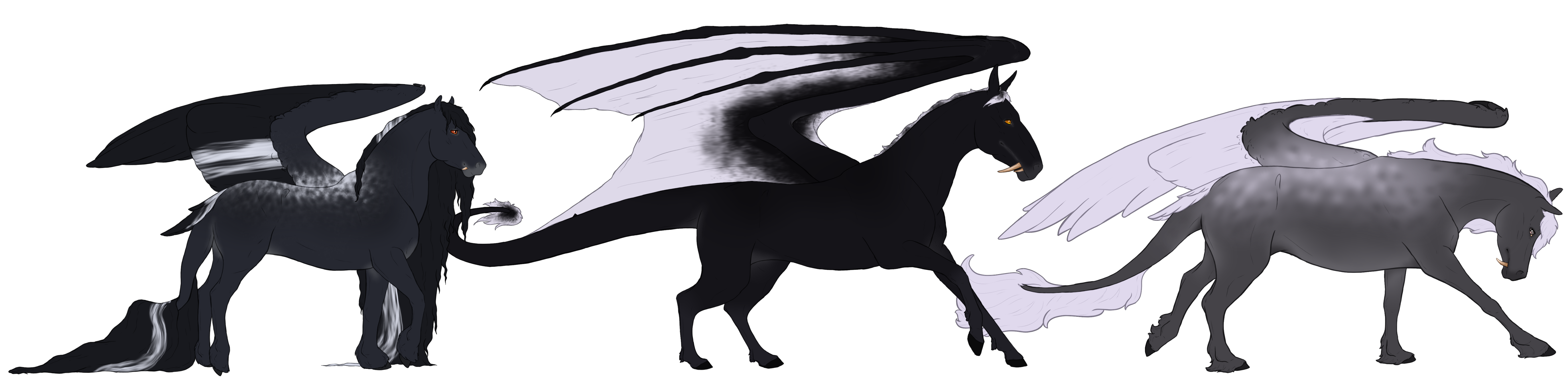
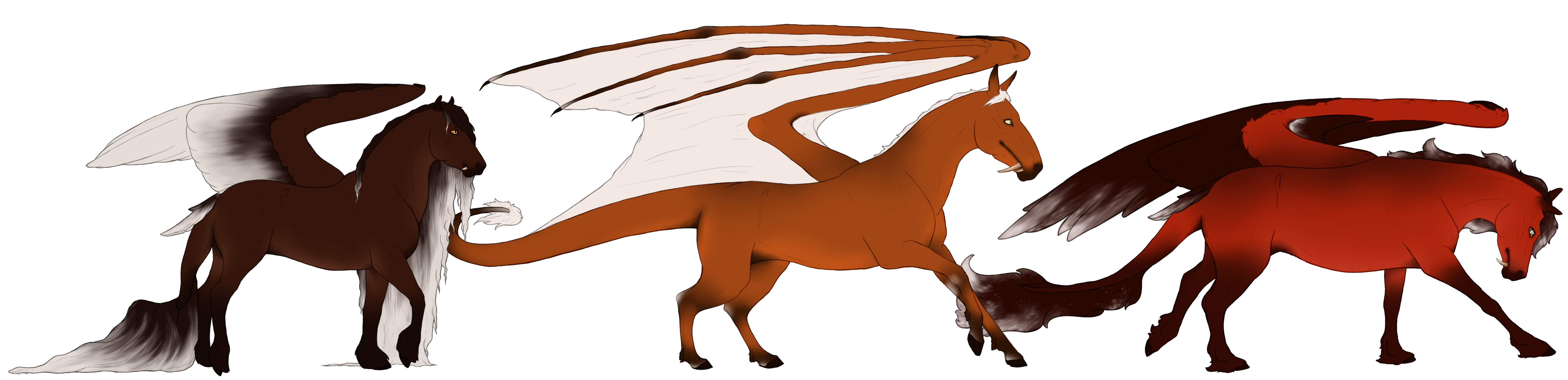
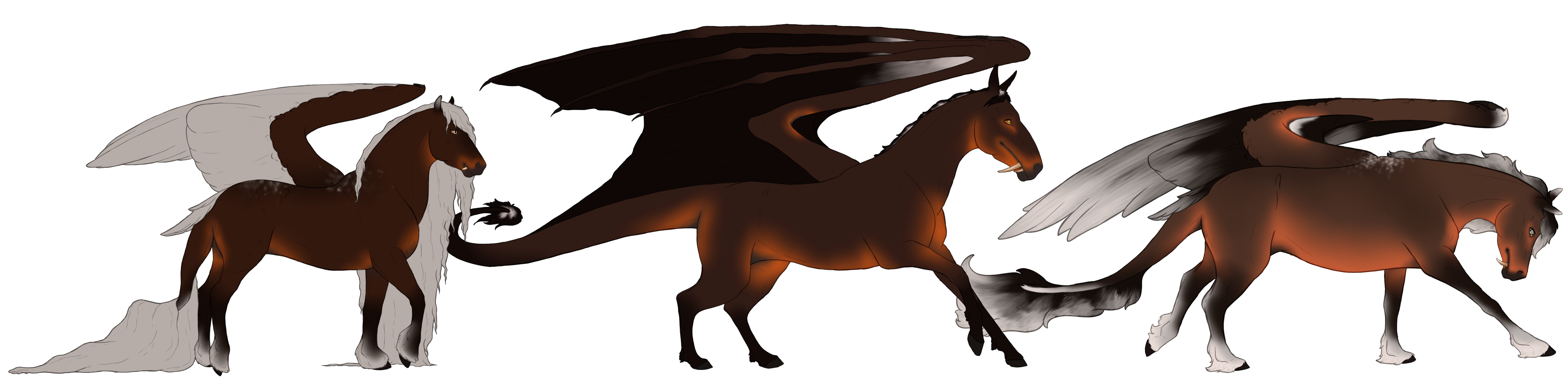
Silver is the same as flaxen, but for blacks and bays. It lightens the mane to a more silvery color. Mane and wings will always be affected in the same manner.
- 'Hidden' silver is the minimum expression.
- Silver can cause dapples on the topline, this is much more common in blacks than seal bays. Classic and wild bays will not have any dappling.
- All bay variants can have their points affected by silver and be partially silvered out.
- Blacks can sometimes have their coats altered by silver to sometimes appear almost like a smoky black silver.
- When present with white markings, silver must still be visible when next to any white in the mane.
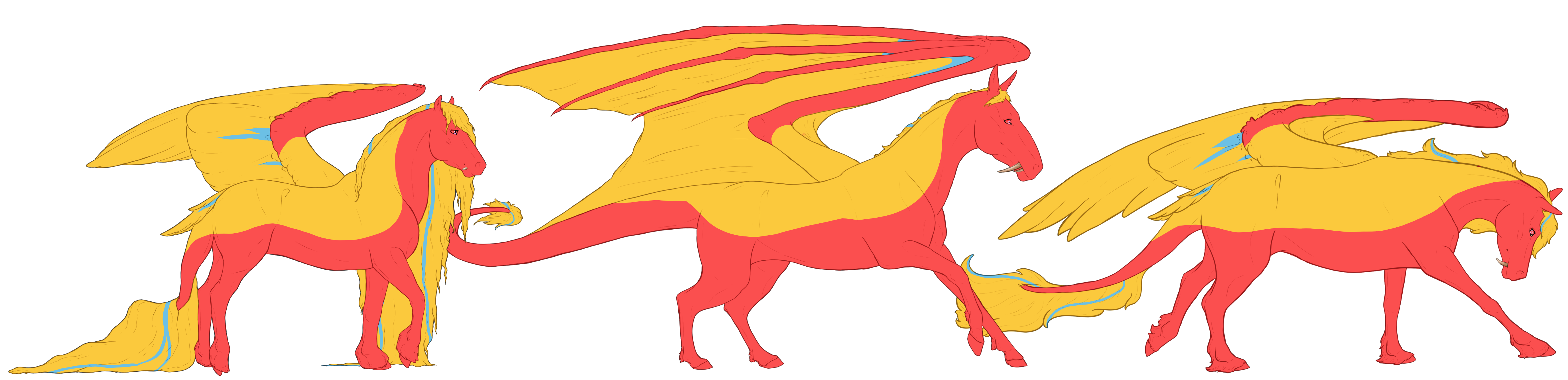
Silver Range
Blue is the minimum required expression.
Yellow is the maximum optional expression.
Red is the area expression is not allowed.
Silver on Black Examples
Min - Med - Max
Silver on Bay and Wild Bay Examples
Med - Max - Min
Silver on Seal Bay Examples
Max - Min - Med
Flaxen[f] (Free)
ff
Trait Count - 1
Flaxen is a gene that is a recessive gene like pearl, meaning it needs two copies to display. Flaxen only affects chestnut-based Beatus and will not show on black or bays.
Flaxen Range
Blue is the minimum required expression.
Yellow is the maximum optional expression.
Red is the area expression is not allowed.
The color of the flaxen will depend on the color of the base. Some chestnuts will have a much paler flaxen if they have a pale base.
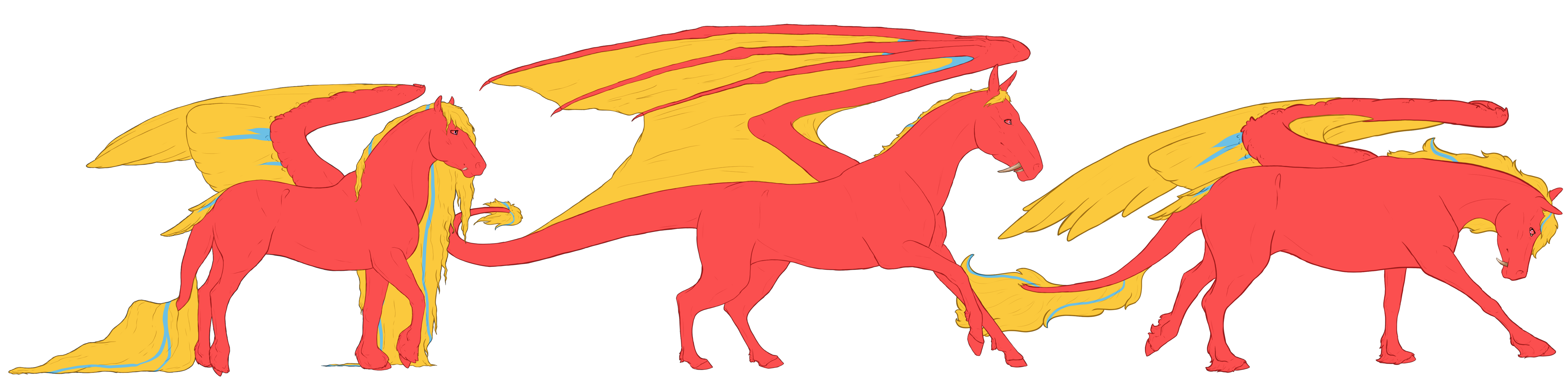
Flaxen Minimum Expression Examples
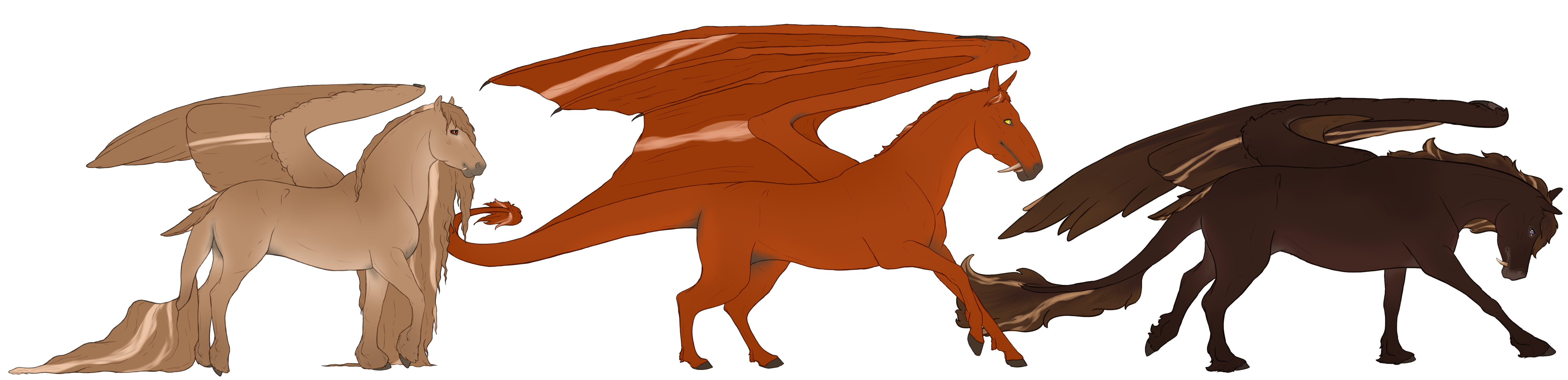
Flaxen Medium Expression Examples
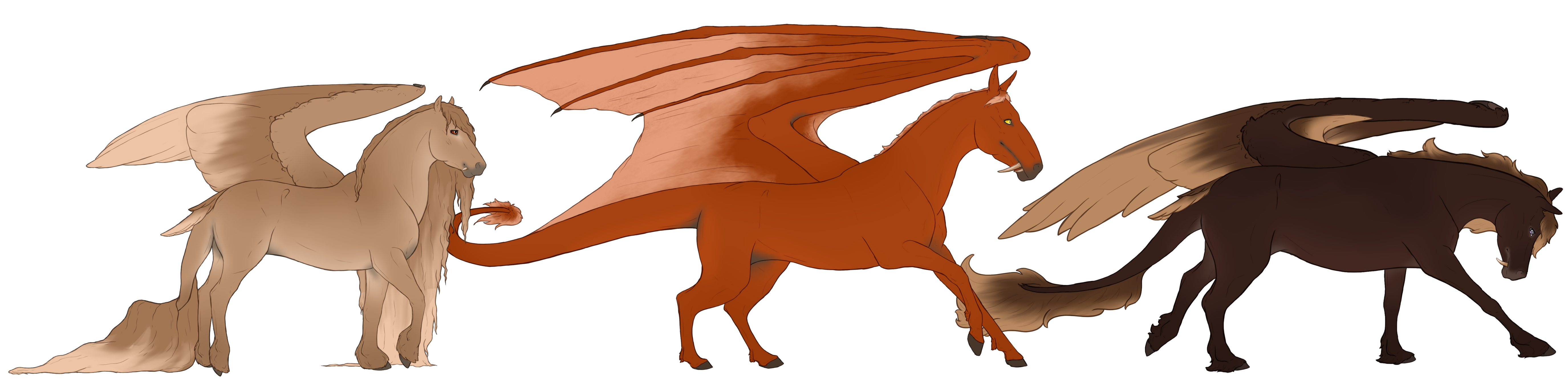
Flaxen Maximum Expression Examples